

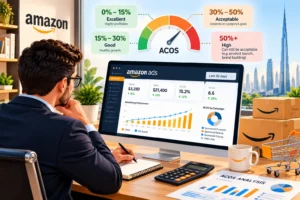
A low ACoS can look impressive on an advertising report while the business quietly loses market share. That is why learning how to lower Amazon TACoS is more valuable than simply cutting bids. TACoS measures ad spend against total Amazon sales, so it reveals whether advertising is creating durable organic demand or merely paying for revenue you could have earned anyway.
For brands building a scalable Amazon operation, TACoS is a profitability and growth metric. The objective is not to force it down at all costs. It is to reduce the percentage of total revenue required to generate momentum while protecting rank, conversion, inventory health, and contribution margin.
What TACoS Actually Tells You
TACoS, or Total Advertising Cost of Sales, is calculated as:
Total ad spend ÷ total Amazon sales × 100
If a brand spends $5,000 on ads and generates $50,000 in total sales, its TACoS is 10%. Unlike ACoS, which divides ad spend only by ad-attributed sales, TACoS includes both paid and organic revenue. That distinction matters because a campaign can have a higher ACoS but still improve TACoS over time if it builds organic rank and lifts total sales.
A rising TACoS is not automatically a failure. New product launches, seasonal pushes, and rank recovery campaigns often require heavier investment. The concern is a rising TACoS without corresponding growth in organic sales, keyword positions, repeat purchases, or total contribution profit. In that scenario, ads are becoming a dependency rather than an accelerator.
How to Lower Amazon TACoS Through Better Conversion
The fastest route to a healthier TACoS is often not inside Campaign Manager. It is on the product detail page.
Every improvement in conversion means you need fewer clicks, less spend, and less discounting to generate a sale. It also improves the likelihood that Amazon will reward the listing with stronger organic visibility. A listing that attracts traffic but fails to convert will force advertising costs upward, regardless of how carefully campaigns are structured.
Start with the fundamentals: a clear main image, benefit-led secondary images, keyword-relevant titles, persuasive bullets, accurate variation structure, and A+ Content that resolves purchase objections. The product page should answer practical questions before the buyer leaves to compare alternatives: What is included? Who is it for? Why is it different? How does it solve the problem better?
Review conversion at the ASIN level, not only at the account level. A catalog-wide TACoS target can conceal one underperforming SKU consuming a disproportionate share of spend. If a product has weak sessions-to-order performance, optimize the listing, price position, reviews, and offer before expanding its budget.
Price, Reviews, and Retail Readiness Matter
Advertising cannot compensate indefinitely for a weak retail offer. When a competitor has stronger reviews, a lower effective price, faster delivery, or a more compelling bundle, your cost per acquisition will rise.
This does not mean every brand should chase the lowest price. Premium positioning can work when the listing clearly communicates superior materials, performance, warranty, design, or brand credibility. The key is alignment. Your price, imagery, claims, reviews, and ad targeting must all support the same value proposition.
Build PPC Around Search Intent, Not Campaign Volume
A crowded campaign structure does not equal a sophisticated one. Brands often accumulate auto campaigns, broad-match campaigns, old product-targeting campaigns, and duplicated targets until budget is spread across too many weak signals.
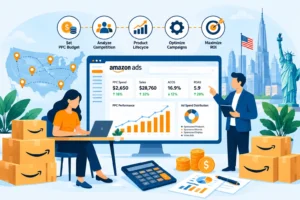
A more profitable approach is to separate discovery from scale. Auto, broad, and research campaigns can identify new search terms and ASIN opportunities. Exact-match and focused product-targeting campaigns should then receive budget when they demonstrate sales, conversion, and strategic relevance.
Do not judge a keyword solely by last-click ACoS. Consider its role in the funnel. A high-intent exact term that supports category rank may deserve investment even if its short-term ACoS is above target. Conversely, a loosely related broad term may produce cheap clicks but no meaningful lift in organic demand.
Use search term reports to make decisions weekly. Move proven terms into controlled campaigns, add irrelevant queries as negatives, and reduce bids on targets that spend without producing orders. This process protects budget while retaining a reliable source of discovery.
Protect Organic Rank While Reducing Waste
The strongest TACoS improvements come from increasing the organic share of sales. When a product ranks for commercially relevant search terms, total revenue can grow without ad spend rising at the same rate.
That requires a deliberate ranking strategy. Identify the search terms that genuinely describe the product and carry enough demand to matter. Then align listing copy, backend attributes, images, pricing, inventory availability, and paid placement around those terms. Ranking for irrelevant traffic is expensive and rarely durable.
Advertising can support rank, but it cannot replace relevance. Amazon increasingly evaluates product context, shopper behavior, and semantic connections between queries and listings. Content written only for old-style keyword repetition is less likely to persuade shoppers or perform well in conversational product discovery. Clear, complete product information gives both customers and Amazon stronger signals.
Monitor organic sales alongside paid sales. If ad spend increases but organic orders remain flat, investigate whether the product is targeting the wrong terms, losing conversion to competitors, or running into stock constraints. The answer is not always a higher bid.
Set Different TACoS Targets by Product Stage
One universal TACoS target can damage a growing catalog. A launch ASIN, a mature bestseller, a seasonal SKU, and a clearance product should not be managed under the same advertising expectation.
For a launch, a higher TACoS may be commercially justified because the brand is purchasing data, visibility, early conversion history, and rank. For an established product with stable organic placement, the priority may shift toward protecting margin and defending key terms. For a low-margin SKU, the allowable spend may need to be tighter from day one.
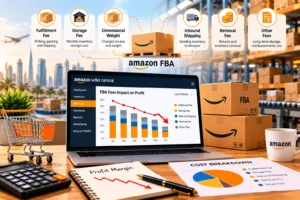
Calculate targets from contribution margin rather than choosing a percentage that sounds efficient. Account for Amazon referral fees, FBA fees, landed cost, storage, returns, coupons, and agency or internal operating costs. A 15% TACoS may be excellent for one ASIN and unprofitable for another.
Fix Inventory Before It Damages Advertising Efficiency
Stockouts are one of the most expensive ways to lose TACoS control. When inventory runs out, organic rank can decline, campaigns lose momentum, and a brand may need to spend aggressively to rebuild visibility after replenishment.
Overstock creates a different pressure: storage fees and aging inventory can lead sellers to overspend on ads merely to move units. Inventory planning should therefore be tied to advertising forecasts, seasonality, lead times, and supplier reliability.
Maintain enough FBA inventory to support growth campaigns, but avoid turning every slow-moving unit into a paid-media problem. If a product cannot sell efficiently because of poor demand, weak positioning, or incorrect pricing, diagnose the commercial issue before increasing ad spend.
Measure TACoS at the Right Level
Account-level TACoS is useful, but it can hide the decisions that matter. Review performance by ASIN, product family, marketplace, campaign type, and time period. Compare week-over-week movement, but also look at longer trends because attribution delays, promotions, and seasonality can distort short windows.
A practical operating rhythm includes weekly bid and search-term decisions, monthly listing and conversion reviews, and quarterly profitability planning. Track total sales, organic sales share, ad sales, TACoS, ACoS, conversion rate, unit session percentage, keyword rank, and contribution margin together. One metric never tells the full story.
For complex catalogs, an experienced Amazon growth partner can connect PPC decisions with listing optimization, inventory operations, international expansion, and account strategy. iNNOVEX approaches TACoS as a full marketplace performance issue, not a bid-management exercise.
The most valuable TACoS reduction is the one that leaves your brand with stronger organic demand, healthier margins, and a more defensible position in search. Build that foundation first, then let advertising scale what is already working.
Frequently Asked Questions
1. What is Amazon TACoS?
Amazon TACoS, or Total Advertising Cost of Sales, measures your total Amazon advertising spend as a percentage of your total Amazon sales, including both advertising-attributed and organic sales. It helps sellers understand how dependent overall revenue is on paid advertising.
2. How do you calculate Amazon TACoS?
Amazon TACoS is calculated using the following formula: Total Ad Spend ÷ Total Amazon Sales × 100. For example, if you spend $5,000 on Amazon advertising and generate $50,000 in total Amazon sales, your TACoS is 10%.
3. What is the difference between ACoS and TACoS?
ACoS measures advertising spend against advertising-attributed sales only. TACoS measures advertising spend against total Amazon sales, including both paid and organic revenue. TACoS can therefore provide a broader view of how advertising contributes to overall Amazon business growth.
4. How can I lower my Amazon TACoS?
You can work toward lowering Amazon TACoS by improving listing conversion, strengthening organic ranking, optimizing PPC campaigns, reducing irrelevant ad spend, improving product targeting, maintaining inventory availability, and increasing the organic share of total sales. The goal should be to improve efficiency without unnecessarily reducing profitable growth.
5. Is a lower Amazon TACoS always better?
No. A lower TACoS is not automatically better if it results from reducing advertising so aggressively that sales, organic visibility, or product momentum decline. New product launches, ranking campaigns, seasonal promotions, and expansion strategies may require a higher TACoS for a period of time. TACoS should be evaluated alongside profitability, growth objectives, organic sales, and contribution margin.
6. What is a good TACoS for Amazon sellers?
There is no single ideal TACoS percentage for every Amazon business or product. A suitable target depends on product margins, Amazon fees, landed cost, fulfillment costs, returns, storage expenses, product stage, competition, and growth objectives. Launch products may justify a higher TACoS than mature products with stable organic rankings.
7. How does improving organic ranking help lower TACoS?
Stronger organic rankings can increase the percentage of sales generated without directly increasing advertising spend. When a product becomes more visible for relevant, commercially valuable search terms and converts effectively, total sales may grow faster than advertising costs. This can help reduce TACoS over time while maintaining advertising support for important keywords and product targets.

1 thought on “How to Lower Amazon TACoS Without Stalling Growth”
Downloading this app felt like finally moving into a house that actually fits my lifestyle. Everything runs so smoothly on my phone and the game library never sleeps. I always feel welcomed and taken care of by the whole community here. phph444app