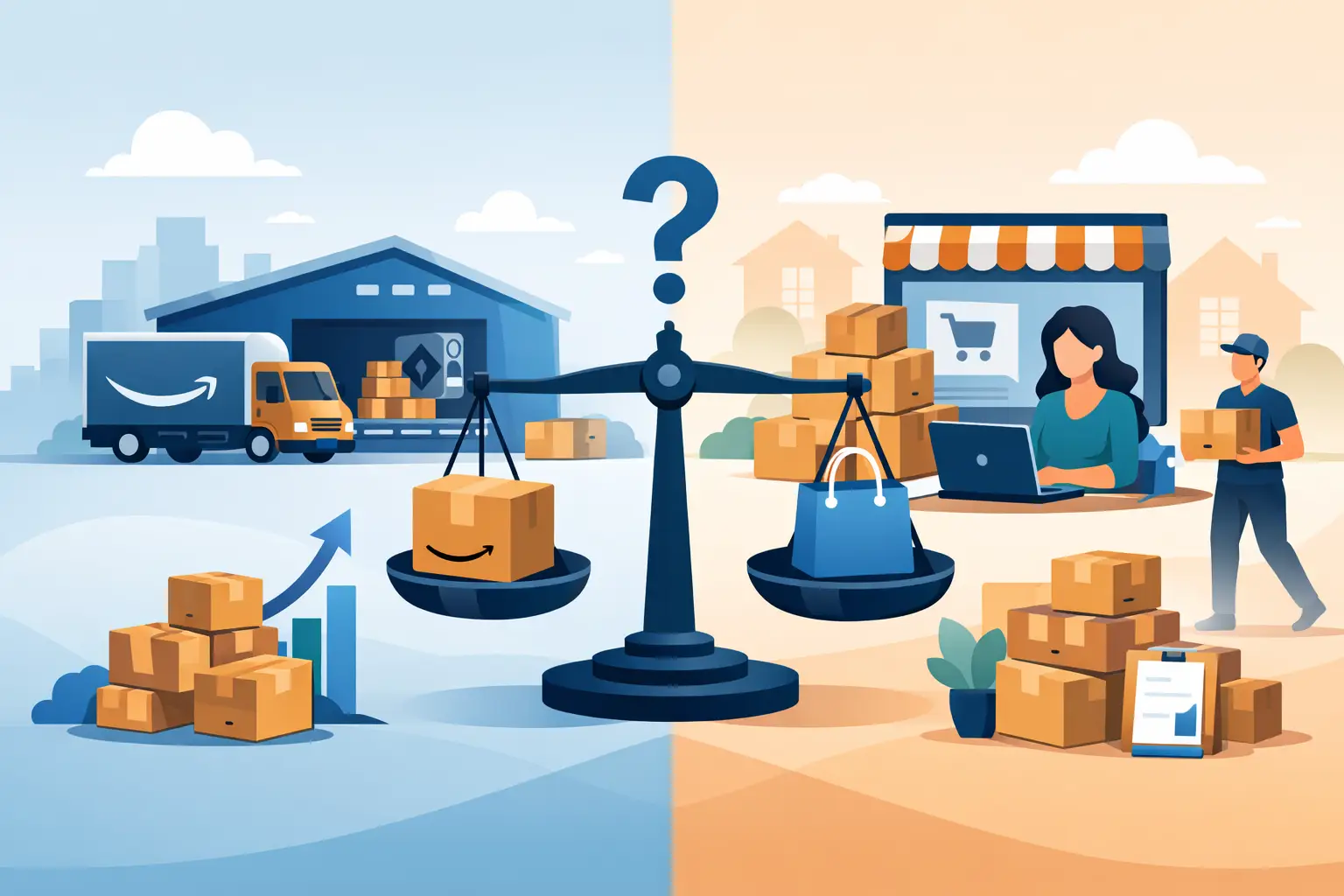
A fulfillment choice can turn a strong product into a profitable Amazon business – or create stockouts, margin pressure, and account-health problems that limit growth. Amazon FBA versus FBM is not simply a question of who ships the order. It is a strategic operating decision affecting conversion, Buy Box performance, working capital, customer experience, and the pace at which a brand can scale.
For most private-label brands, FBA is the foundation for volume. For certain catalogs, FBM protects margin and gives the seller control Amazon cannot provide. The strongest answer is often not one model over the other, but a deliberate blend built around product economics, inventory velocity, and operational capability.
What FBA and FBM Actually Mean
With Fulfillment by Amazon (FBA), a seller sends inventory into Amazon fulfillment centers. Amazon stores the units, picks, packs, ships, handles customer service, and processes most returns. Eligible listings can receive Prime delivery benefits, which can materially improve conversion when shoppers are comparing similar offers.
With Fulfillment by Merchant (FBM), the seller or a third-party logistics partner stores and ships each order. The seller remains responsible for meeting Amazon’s delivery promises, managing customer inquiries, handling returns, and maintaining valid tracking and shipping performance.
Both methods can support a successful Amazon business. The difference is where the complexity sits. FBA shifts much of the order-level execution to Amazon, while FBM keeps it inside the brand’s own operation.
Amazon FBA Versus FBM: The Commercial Trade-Off
FBA is built for convenience, Prime eligibility, and operational scale. FBM is built for control, flexibility, and potentially stronger unit economics. Neither advantage is automatic.
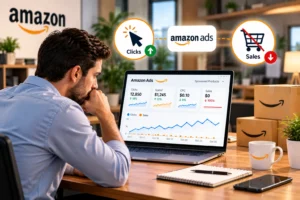
An FBA offer can convert more effectively because shoppers recognize the fast delivery and simplified return experience. That conversion lift matters beyond the individual sale. Better conversion can support organic ranking, improve the efficiency of Sponsored Products campaigns, and help a new SKU gain traction faster. If your advertising is driving qualified traffic but the offer is not converting, fulfillment speed and trust can be part of the problem.
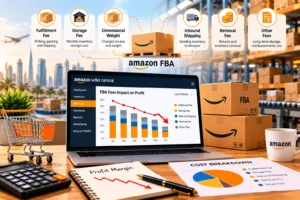
The cost side requires more discipline. FBA fees include fulfillment charges, storage charges, and potential aged-inventory costs. These must be modeled alongside referral fees, inbound freight, prep, returns, PPC spend, discounts, and the cost of capital tied up in stock. A product that looks profitable before FBA storage is not necessarily profitable after a slow quarter.
FBM gives brands more control over packaging, shipping carriers, inserts where permitted, bundling, and inventory allocation across sales channels. It can be particularly attractive for heavy, oversized, fragile, customized, or low-velocity items where FBA fees and storage exposure become restrictive. But that control comes with a service-level obligation. Late shipment, invalid tracking, cancellations, and weak return handling can damage account health quickly.
The right question is not, “Which model costs less?” It is, “Which model produces the best contribution margin after fulfillment, advertising, inventory risk, and the conversion impact of delivery speed?”
When FBA Is Usually the Better Choice
FBA is generally the strongest model for standard-size products with dependable demand, healthy margins, and a clear path to repeatable sales velocity. It is especially useful when a brand is launching into a competitive category where Prime delivery is expected rather than viewed as a premium feature.
It also reduces operational fragmentation. Instead of building an internal packing workflow, negotiating carrier rates, managing daily dispatch cutoffs, and answering shipment-related messages, the seller can focus more resources on product quality, listing conversion, advertising, and replenishment planning.
FBA is often a practical fit when:
- The SKU is compact, durable, and inexpensive to ship into Amazon’s network.
- The product has steady demand and turns inventory consistently.
- Prime eligibility is likely to improve conversion against close competitors.
- The brand is expanding across multiple marketplaces and needs a scalable operating structure.
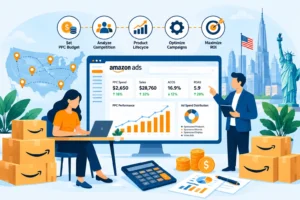
For a fast-moving private-label SKU, FBA can create the operational capacity needed to scale PPC without overwhelming the fulfillment team. That matters because advertising spend should increase in line with supply-chain readiness. Driving more sales into an inventory position that cannot support them is not growth. It is a stockout risk with a marketing budget attached.
When FBM Can Protect Profitability
FBM is not a fallback for sellers who cannot access FBA. For the right catalog, it is the more commercially disciplined model.
Consider a bulky home product that carries high FBA fulfillment fees, or a made-to-order item where sending inventory into Amazon creates unnecessary storage exposure. An FBM operation may allow the brand to ship directly from its warehouse, use product-specific protective packaging, and keep inventory available for Shopify, wholesale, or other marketplaces at the same time.
FBM can also make sense for seasonal products with uncertain demand. Rather than committing large volumes to Amazon fulfillment centers and facing aged-inventory charges after the season ends, a seller can retain inventory control and fulfill only what sells. The trade-off is that the operation must be reliable enough to meet every customer promise.
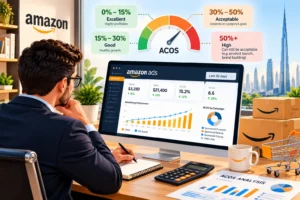
A capable FBM program needs more than a label printer. It requires inventory accuracy, clear cutoffs, carrier contingency plans, return workflows, trained support staff, and performance monitoring. Sellers should watch late shipment rate, cancellation rate, valid tracking rate, on-time delivery, and customer contact volume as closely as they watch ACoS.
The Hybrid Model: Often the Strongest Operating Design
Many growth-stage brands should not force an all-or-nothing decision. A hybrid FBA and FBM strategy can reduce risk while preserving sales momentum.
A common structure is to hold the core, high-velocity assortment in FBA and keep reserve inventory in a warehouse or 3PL. The reserve stock can replenish FBA before a stockout occurs, while also supporting FBM orders if Amazon inventory becomes unavailable. This creates resilience during inbound delays, receiving backlogs, inventory discrepancies, or sudden demand spikes from a promotion.
Some brands use FBA for their best-selling standard-size variations and FBM for oversized bundles, premium kits, replacement parts, or slower-moving colors and sizes. Others activate FBM as a backup offer when FBA stock is temporarily depleted. The approach must be carefully managed to avoid pricing conflicts, duplicate inventory errors, and customer experience inconsistencies.
The hybrid model is particularly valuable during international expansion. Each marketplace has different fee structures, tax requirements, delivery expectations, storage limitations, and cross-border logistics considerations. A fulfillment model that works in the United States may not produce the same margin in the UK, UAE, Europe, or Australia. Decisions should be made marketplace by marketplace, not copied blindly from one region to another.
Build the Decision From SKU-Level Data
Do not select fulfillment at the account level and assume every product belongs in the same program. Evaluate each SKU based on its physical profile and commercial role.
Start with landed cost: product cost, packaging, inspection, freight, duties, customs, and inbound handling. Then compare FBA fees against your true FBM cost, including warehouse labor, packaging materials, carrier charges, software, customer service, and returns. Add referral fees, advertising cost, expected return rate, and the cost of holding inventory.
Next, estimate the conversion difference. If FBA improves conversion from 12% to 16%, that can change the economics of a campaign even if per-order fulfillment is more expensive. More conversion can reduce the effective cost of acquiring each order and improve organic sales velocity. Conversely, if a specialized FBM item has little Prime-driven conversion benefit, the additional FBA cost may not be justified.
Finally, assess inventory risk. High-velocity products can absorb FBA storage more comfortably because they move. Slow sellers, seasonal items, and uncertain new launches need smaller test shipments and tighter replenishment rules. Forecasting should account for production lead time, freight transit, customs clearance, Amazon receiving time, sales velocity, safety stock, and promotional periods.
Fulfillment Is Part of Your Growth Engine
Fulfillment affects far more than shipping. It shapes how confidently you can launch a SKU, how aggressively you can scale advertising, how well your listing converts, and whether customers receive the experience your brand promises.
FBA is usually the better growth lever for proven, fast-moving products where Prime conversion and operational scale outweigh the fees. FBM is often the smarter choice where size, customization, margin sensitivity, or inventory flexibility demands control. A hybrid model gives many brands the most resilient path forward.
Before committing inventory, build the SKU-level model, stress-test demand scenarios, and align fulfillment with your broader launch, PPC, and replenishment plan. iNNOVEX helps brands turn that operational decision into a scalable Amazon growth system – one built for profitable availability rather than sales volume alone.
Frequently Asked Questions
1. What is the main difference between Amazon FBA and FBM?
Amazon FBA (Fulfillment by Amazon) allows sellers to send inventory to Amazon fulfillment centers, where Amazon stores, picks, packs, ships orders, handles customer service, and processes most returns. With FBM (Fulfillment by Merchant), the seller or a third-party logistics provider stores and ships products while managing delivery performance, customer inquiries, and returns.
2. Is Amazon FBA better than FBM for most sellers?
FBA can be a strong option for standard-size products with reliable demand, healthy margins, and consistent sales velocity. FBM can be more suitable for oversized, heavy, fragile, customized, seasonal, or slower-moving products where fulfillment fees and storage costs may have a greater impact on profitability.
3. Can Amazon FBA improve product conversion rates?
FBA listings may benefit from faster delivery and Prime eligibility for eligible products, which can help improve customer confidence when shoppers compare similar offers. The actual impact depends on the product category, competition, pricing, and customer expectations.
4. When should an Amazon seller choose FBM?
FBM can be a suitable fulfillment option for products that are bulky, oversized, made to order, customized, fragile, seasonal, or slow moving. It also gives sellers greater control over packaging, shipping carriers, inventory allocation, and fulfillment across multiple sales channels.
5. Can I use both Amazon FBA and FBM for my business?
Yes. A hybrid fulfillment strategy can combine FBA and FBM based on the needs of individual SKUs. For example, fast-moving products can be stored in FBA while reserve inventory remains in a warehouse or 3PL facility to support replenishment or merchant-fulfilled orders when needed.
6. How should I compare the costs of Amazon FBA and FBM?
Sellers should compare the complete cost of each fulfillment method. This may include product cost, inbound freight, FBA fulfillment and storage fees, warehouse labor, packaging, carrier charges, customer service, returns, advertising costs, referral fees, and inventory holding costs.
7. Should Amazon fulfillment decisions be made for each SKU separately?
Yes. Each SKU can have different dimensions, weight, demand, margins, inventory velocity, storage requirements, and conversion potential. Evaluating fulfillment at the SKU level can help sellers choose between FBA, FBM, or a hybrid strategy based on product economics and operational requirements.