Product Research & Product Hunting Services for Amazon Sellers
Get Your Free Strategy Consultation
Speak with an Amazon specialist about growing on Amazon.ae
What Is Amazon Product Research?
Amazon product research is the process of finding and validating products that have real customer demand, manageable competition, healthy profit margins, and practical sourcing potential. A good product is not selected only because it is trending. It must be checked for keyword demand, competitor strength, reviews, pricing, FBA fees, PPC cost, sourcing feasibility, trademark risk, compliance requirements, and long-term scalability.
At iNNOVEX, product research is not just about finding products. It is about helping sellers make safer business decisions before they spend money on inventory.
- Products aligned with consumer preferences
- Competitive pricing strategies
- Long-term growth potential
- Data-backed decisions
Why Product Research Matters Before
Launching on Amazon
The Problem
Many sellers choose products based on social media trends, competitor revenue screenshots, or random tool results. This can lead to products with hidden competition, weak margins, high return rates, or expensive launch costs.
The Risk
Without proper validation, sellers may invest in inventory that does not sell, cannot rank, has trademark issues, needs difficult compliance, or becomes unprofitable after Amazon fees, freight, storage, and PPC.
The Solution
iNNOVEX uses a structured product hunting and validation process to check demand, competition, profitability, sourcing feasibility, launch difficulty, and marketplace fit before recommending a product.

What Is Product Hunting?
Product hunting is the process of searching for potential product ideas that can be sold profitably on Amazon or other eCommerce marketplaces. It includes identifying product opportunities, checking customer demand, reviewing competitors, studying market gaps, comparing prices, and filtering products based on risk and profit potential.
Product hunting is the first step. Product research is the deeper validation process that confirms whether the shortlisted idea is worth launching.
A product may look attractive at first, but it should only move forward after it passes demand, competition, profit, sourcing, compliance, and launch feasibility checks.
- Products aligned with consumer preferences
- Competitive pricing strategies
- Long-term growth potential
- Data-backed decisions
Product Research vs Product Hunting
Both product hunting and product research are important. Product hunting helps sellers discover possible opportunities, while product research helps decide whether the opportunity is commercially safe and practical.
At iNNOVEX, we combine both stages so sellers do not rely only on tool data or guesswork.
| Point | Product Hunting | Product Research |
|---|---|---|
| Main Purpose | Finding product ideas | Validating product opportunities |
| Focus | Discovery | Decision-making |
| Data Used | Trends, categories, tools, gaps | Keyword demand, sales data, profit, fees, competition |
| Output | Product shortlist | Final validated product recommendation |
| Risk Level | Early-stage filtering | Detailed risk reduction |
| Best For | Finding options | Selecting the right product to launch |
What iNNOVEX Covers in Product
Research & Hunting
Product Idea Discovery
We identify product opportunities based on marketplace demand, category behavior, competition level, customer needs, and long-term selling potential.
Keyword Demand Analysis
We check whether buyers are actively searching for the product using Amazon keyword research and search demand indicators.
Competitor Analysis
We study competitor listings, prices, reviews, ratings, images, content quality, brand strength, offers, and ranking difficulty.
Sales and Revenue Estimation
We review estimated monthly sales, revenue patterns, category trends, seasonality, and product movement to understand demand quality.
Profitability Calculation
We calculate product cost, landed cost, Amazon referral fees, FBA fees, storage fees, packaging cost, PPC expectation, and estimated net margin.
Sourcing Feasibility
We check whether the product can be sourced practically with reasonable MOQ, quality control, packaging options, and supplier availability.
Risk Review
We review product risks including trademark conflict, patent sensitivity, restricted categories, compliance requirements, fragile products, dangerous goods, and high-return risk.
Launch Strategy Direction
We provide direction for listing optimization, pricing, launch budget, PPC difficulty, ranking strategy, and next steps.
Our Step-by-Step Amazon Product
Research Process
01
Understand Your Business Goal
02
Select Marketplace Direction
03
Research Category Demand
04
Build Initial Product Shortlist
05
Validate Keyword
Demand
06
Analyze
Competitors
07
Estimate Sales &
Revenue
08
Calculate
Profitability
09
Check Sourcing
Feasibility
10
Review Product
Risks
11
Score the
Product
12
Recommend Next
Steps
Amazon FBA Product Research for
Private Label Sellers
Amazon FBA product research requires more than checking sales volume. A product must be suitable for Amazon fulfillment, storage, packaging, customer expectations, and long-term ranking.
For FBA sellers, we review product size, weight, referral fees, FBA fees, storage cost, shipping cost, profit margin, PPC launch budget, and inventory planning risk. A product with high revenue but low margin may not be a good product for FBA.
iNNOVEX helps sellers understand whether a product is suitable for FBA before they place an order with suppliers.
Local Market Expertise
We analyze consumer behavior and regional buying preferences to identify products that align with both local demand and global market trends, helping sellers maximize sales and growth on Amazon.
Advanced Tools & Data
Our AI powered tools and advanced analytics deliver insights that are accurate, actionable, and tailored to help Amazon sellers make informed decisions, optimize product strategies, and maximize growth in the marketplace.
Tailored Research
We provide personalized insights tailored to your business goals, whether you are a new Amazon seller or scaling an existing store, helping you make data driven decisions and achieve sustainable growth.
End-to-End Support
From product discovery to listing optimization, we provide complete Amazon support to help sellers launch successfully, grow their stores, increase visibility, improve conversions, and achieve long-term success in the marketplace.
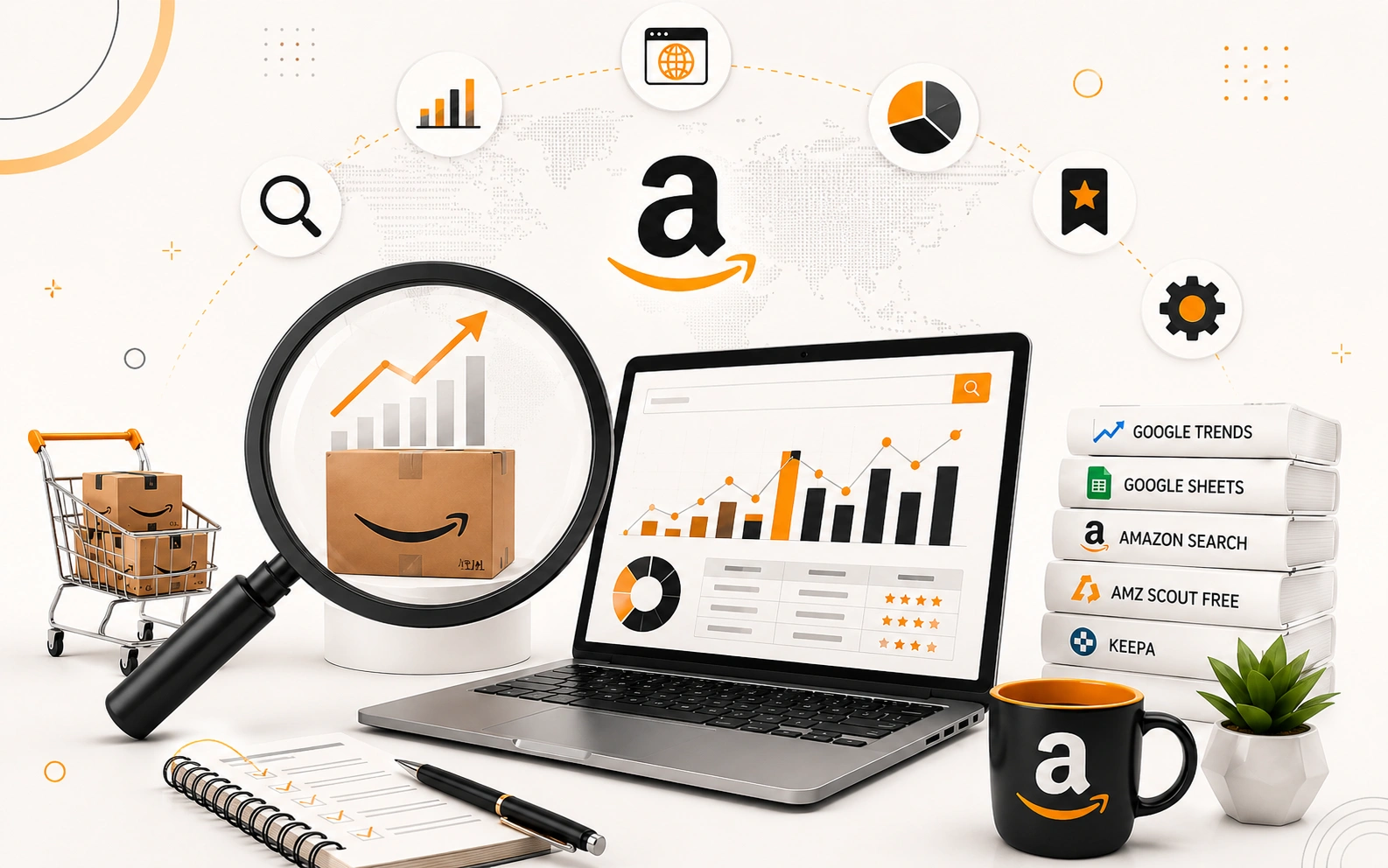
Product Research Tools and Data
Points We Consider
Tools can help with product research, but tools alone cannot make the final business decision. Data must be interpreted with experience, market understanding, sourcing knowledge, and launch cost awareness.
Depending on the marketplace and project, product research may include data from Amazon search results, keyword tools, competitor listings, BSR movement, review analysis, pricing checks, Amazon fee calculators, sourcing platforms, and marketplace-specific research tools.
We use tools to support decision-making, but we do not recommend products only because a software shows high sales.








Can You Do Product Research with Free Tools?
Yes, beginners can start product research with free tools, but free tools are usually limited. Sellers can use Amazon search suggestions, competitor listings, customer reviews, bestseller pages, keyword ideas, price comparison, and basic fee calculators to understand the market.
However, free research is not enough for final inventory decisions. Before investing in product sourcing, sellers should validate demand, profit, competition, PPC cost, sourcing feasibility, and risk.
What Makes a Product Worth
Launching?
| Criteria | Description |
|---|---|
| Real Buyer Demand | Confirms that customers are actively searching for and purchasing the product. |
| Clear Keyword Search Volume | Verifies sufficient search traffic through relevant keywords and buyer intent. |
| Manageable Competition | Evaluates whether the market can be entered without competing against overwhelming competition. |
| Healthy Profit Margin | Ensures the product can generate sustainable profits after all costs are considered. |
| Reasonable Sourcing Cost | Reviews manufacturing and procurement costs to maintain profitability. |
| Practical MOQ | Confirms that minimum order quantities align with the seller’s budget and inventory strategy. |
| Acceptable FBA Fees | Assesses Amazon fulfillment fees to prevent excessive costs from reducing margins. |
| Low Compliance Complexity | Identifies products with fewer regulatory, certification, or marketplace restrictions. |
| Low Return Risk | Evaluates the likelihood of customer returns due to product issues or expectations. |
| Strong Differentiation Opportunity | Determines whether the product can stand out from competitors through unique features or value. |
| Good Review Gap | Identifies weaknesses in competitor reviews that can be improved upon. |
| Clear Listing Improvement Potential | Assesses opportunities to create a stronger product listing than existing competitors. |
| Sustainable PPC Launch Cost | Evaluates advertising competitiveness and expected launch expenses. |
| Branding & Packaging Potential | Reviews opportunities to enhance perceived value through branding and packaging improvements. |
Common Product Research Mistakes
RNew Amazon Sellers Make
01
Choosing Products Only Because They Are Trending
02
Ignoring Profit
Margins
03
Copying Competitors Without Differentiation
04
Ignoring Trademark and
Patent Risk
05
Underestimating PPC
Costs
06
Not Checking Sourcing
Practicality
Dropshipping Product Research
Dropshipping product research focuses on fast-moving products, supplier availability, shipping time, pricing gap, customer demand, and advertising potential. Unlike Amazon FBA, dropshipping research also depends heavily on delivery experience, supplier reliability, product quality, and refund risk.
iNNOVEX can help sellers evaluate whether a product is better suited for dropshipping, Amazon FBA, private label, or another eCommerce model.
Private Label Product Research
Private label product research is not only about finding an item to sell. It is about finding a product that can become a brand. The product should have demand, improvement potential, packaging opportunity, repeat purchase potential, and a clear customer problem to solve.
For private label sellers, iNNOVEX reviews product differentiation, brand positioning, packaging direction, trademark suitability, Brand Registry potential, listing strategy, and launch cost.
What You Receive from
iNNOVEX
| Deliverable | Description |
|---|---|
| Product Shortlist | A curated list of product opportunities that meet the research criteria. |
| Marketplace Opportunity Review | Analysis of the selected marketplace and its potential for product success. |
| Keyword Demand Summary | Overview of search demand, keyword volume, and buyer intent indicators. |
| Competitor Analysis | Review of competing products, pricing, reviews, listings, and market positioning. |
| Estimated Sales & Revenue Review | Projections based on market demand and competitor performance data. |
| Profitability Calculation | Breakdown of costs, fees, margins, and expected profit potential. |
| FBA Fee Review | Assessment of Amazon fulfillment and storage fees that may affect profitability. |
| Sourcing Feasibility Notes | Insights regarding supplier availability, MOQ, production costs, and lead times. |
| Risk & Compliance Notes | Identification of marketplace restrictions, certifications, and potential risks. |
| Product Scoring Sheet | Comparative scoring system used to evaluate product opportunities. |
| Launch Difficulty Assessment | Evaluation of the effort, competition, and investment required for launch. |
| Recommended Product Direction | Final recommendation based on research findings and business goals. |
| Next-Step Launch Roadmap | Action plan outlining the next stages from sourcing to product launch. |
Who Should Use Our Product
Research Service?
New Amazon Sellers
For beginners who want to avoid costly mistakes before buying inventory.
Private Label Sellers
For sellers who want to build a brand with better product positioning and long-term potential.
Existing Amazon Sellers
For sellers who want to expand into new products, categories, or marketplaces.
UAE, USA, UK, Europe and Australia Sellers
For sellers targeting different Amazon marketplaces with unique competition and compliance requirements.
eCommerce Entrepreneurs
For business owners who want to compare Amazon, Shopify, Noon, Walmart, or TikTok Shop opportunities.
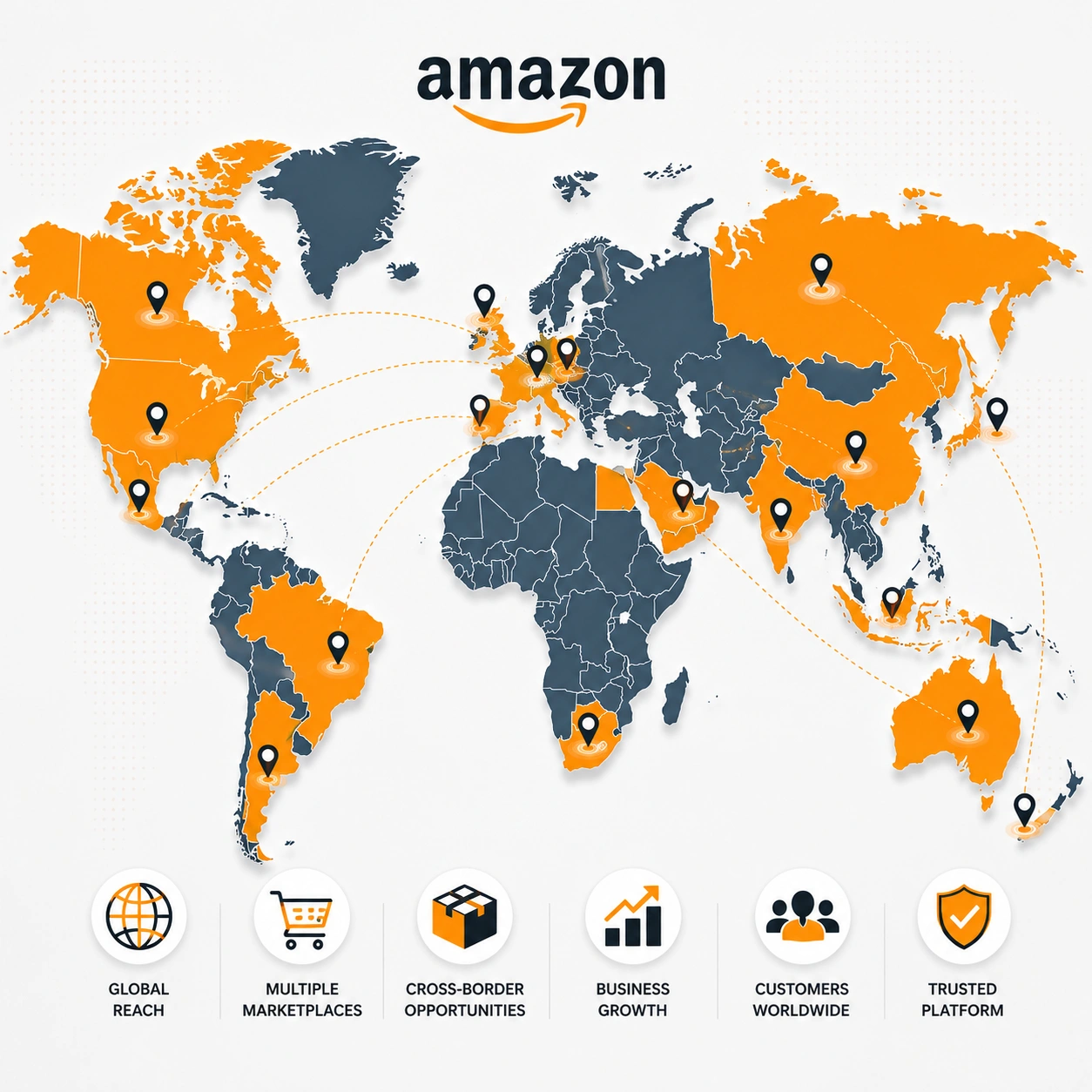
Product Research for UAE, USA, Australia, Europe, UK and KSA Sellers
Every Amazon marketplace has different demand, competition, fees, logistics, compliance, and customer behavior. A product that works in one marketplace may not work in another.
iNNOVEX supports product research for Amazon UAE, Amazon USA, Amazon UK, Amazon Australia, Amazon Europe, Amazon KSA, and global marketplace expansion.
For UAE sellers, we consider Amazon UAE, Noon, local logistics, company setup, VAT, and regional customer demand.
For USA sellers, we review Amazon.com competition, FBA fees, sourcing routes, pricing, and private label launch potential.
For Australia sellers, we check demand gaps, competition level, logistics, and category feasibility.
For Europe and UK sellers, we consider VAT, compliance, language differences, fulfillment options, and regional expansion planning.
Frequently Asked Questions
What is product research in Amazon?
What is product hunting?
What is the difference between product research and product hunting?
Can iNNOVEX help me find a product for Amazon FBA?
Do you guarantee that a product will be successful?
Which marketplaces do you research for?
Do you also help with sourcing after product research?
Can beginners use this service?
What information do you need from me before product research?
How long does product research take?
Find the Right Product Before You Invest in Inventory
A profitable Amazon business starts with the right product decision. Before you spend money on sourcing, packaging, shipping, listing, and PPC, make sure your product idea is properly researched and validated.
Book a product research consultation with iNNOVEX and take the next step with clarity.