
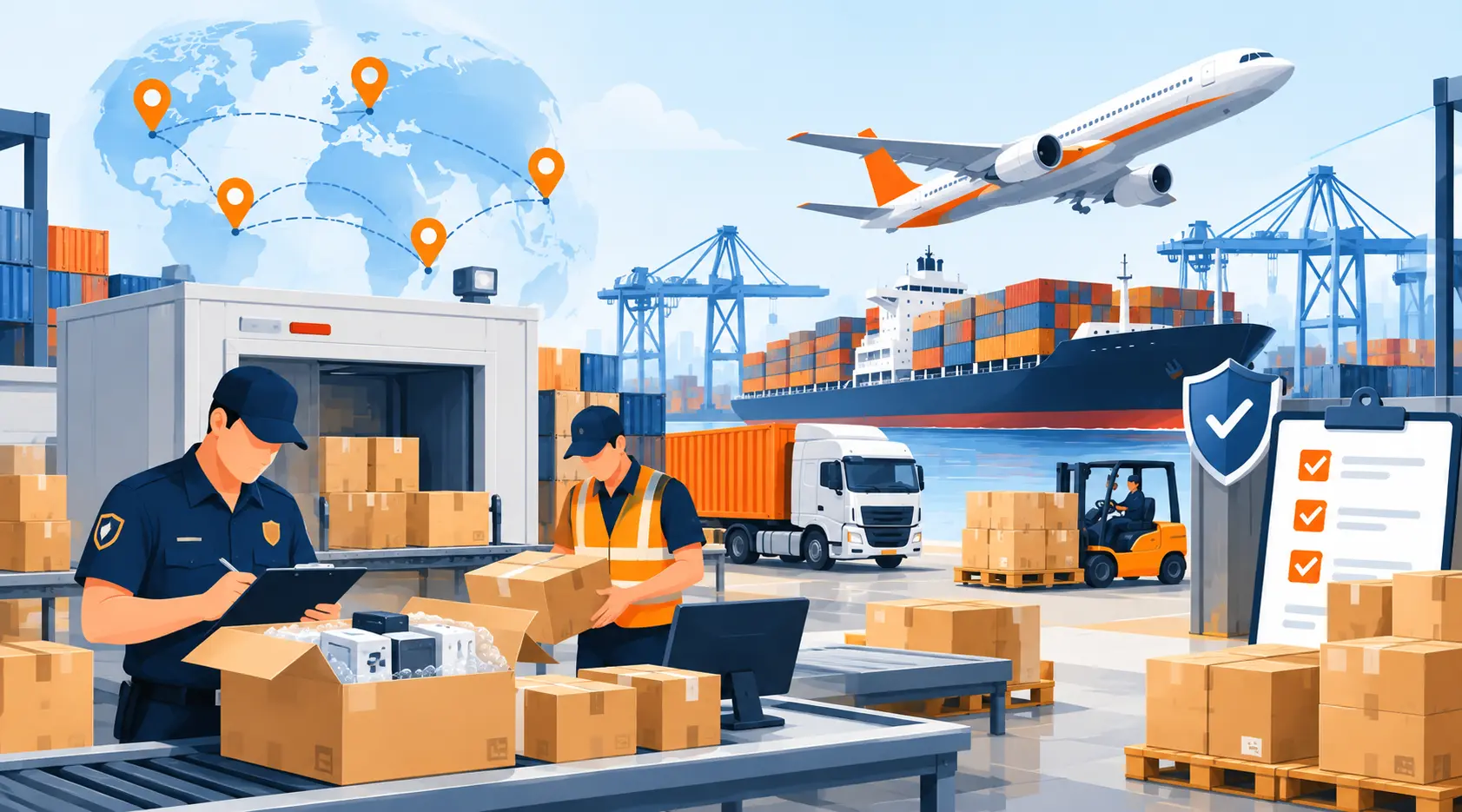
Manage customs clearance is an important part of the international Amazon supply chain. When products are imported from another country, the shipment may need to pass through customs before it can continue to the final destination, warehouse, or Amazon fulfillment network.
For Amazon sellers, customs clearance involves more than simply moving products across a border. Sellers need to understand shipping documents, product classifications, declared values, duties and taxes, importer responsibilities, customs procedures, and communication with suppliers and logistics providers.
A well-organized customs process can help reduce avoidable documentation problems and shipment delays. On the other hand, inaccurate information, missing documents, incorrect product classifications, or unclear responsibilities can create complications during importation.
This guide explains how customs clearance works for Amazon products, what sellers should prepare before shipping, how to coordinate with suppliers and freight forwarders, and how customs clearance fits into the broader Amazon FBA supply chain.
What Is Customs Clearance?
Customs clearance is the process through which imported or exported goods are reviewed and processed by the relevant customs authority before they can continue through the border.
During the process, customs authorities may review information about the shipment, including the products, quantities, declared value, origin, classification, and supporting documentation.
The requirements vary depending on the country of origin, destination country, product category, shipment method, and applicable regulations.
For Amazon sellers, customs clearance is particularly important when sourcing inventory internationally. Products manufactured in one country may need to pass through customs before reaching a warehouse, prep center, or Amazon fulfillment network in another country.
Why Customs Clearance Matters for Amazon Sellers
Customs clearance is directly connected to inventory movement.
A product may be fully manufactured and ready for shipment, but it cannot continue through the international supply chain until the applicable import procedures are completed.
Problems with documentation or shipment information can result in additional questions, inspections, delays, storage charges, or other costs depending on the circumstances.
This is why customs planning should begin before the products leave the supplier.
Amazon sellers should understand who is responsible for customs-related processes and costs under their shipping arrangement.
Understand Your Import Responsibilities
Before shipping products internationally, determine who will be responsible for the import process.
Depending on the shipping arrangement, the seller, importer, freight forwarder, customs broker, or another party may have specific responsibilities.
Do not assume that the supplier or freight company automatically handles every customs requirement.
Confirm the responsibilities for customs documentation, duties, taxes, clearance, and final delivery before the shipment is booked.
The exact requirements depend on the countries involved and the commercial terms used for the shipment.
Prepare Accurate Customs Documentation
Accurate documentation is one of the most important parts of customs clearance.
Depending on the shipment, documentation may include a commercial invoice, packing list, bill of lading or airway bill, product information, certificates, permits, or other documents required by the relevant authorities.
The information across the documents should be consistent.
Product descriptions, quantities, values, weights, supplier information, buyer information, and other relevant details should accurately represent the shipment.
Avoid vague product descriptions when more specific information is required.
Your freight forwarder or customs professional can help identify the documents required for the specific shipment and destination.
Understand the Commercial Invoice
A commercial invoice provides important information about an international shipment.
It can contain details such as the seller, buyer, product description, quantity, unit price, total value, country of origin, and other commercial information.
The invoice should accurately represent the transaction.
Amazon sellers should avoid treating the commercial invoice as a simple formality. Inaccurate values or descriptions can create questions during customs processing.
Before shipment, review the invoice carefully and make sure the information matches the actual products being imported.
Prepare an Accurate Packing List
A packing list provides information about how the goods are packed.
It may include the number of cartons, product quantities, carton dimensions, gross weight, net weight, and other shipment details.
The packing list should correspond with the physical shipment.
For example, if the supplier says the shipment contains a specific number of cartons and units, the physical shipment should match those details.
Accurate carton information can also help freight providers and logistics teams coordinate transportation and handling.
Understand HS Codes and Product Classification
Products imported internationally are generally classified using customs tariff classification systems.
HS codes are used to classify products for customs purposes, and the applicable classification can affect duties, taxes, documentation, and other import requirements.
Amazon sellers should not select a classification simply because it produces a lower duty rate.
The correct classification depends on the actual characteristics and intended use of the product and the rules applicable in the destination country.
When classification is uncertain, work with a qualified customs professional or relevant authority to determine the appropriate classification.
Declare Product Value Accurately
Customs authorities may require the value of imported goods to be declared.
The declared value should accurately reflect the applicable transaction and customs requirements.
Do not intentionally understate product values to reduce potential duties or taxes.
Incorrect declarations can create customs problems and may lead to additional scrutiny, penalties, or delays depending on the jurisdiction.
Your commercial invoice and other documentation should provide consistent and accurate information.
Understand Customs Duties and Taxes
Importing products may involve customs duties, taxes, fees, or other charges depending on the destination country and product classification.
The amount can vary based on the product, declared value, country of origin, applicable tariff treatment, and local rules.
Amazon sellers should include potential import-related costs when calculating the landed cost of inventory.
The supplier’s product price alone does not represent the complete cost of getting inventory ready for sale.
A more complete calculation may include manufacturing, packaging, inspection, freight, customs-related charges, duties, taxes, warehousing, and other logistics costs.
Work With a Freight Forwarder
A freight forwarder can coordinate different parts of the international transportation process.
Depending on the service arrangement, a freight forwarder may coordinate supplier pickup, export handling, international transportation, documentation, customs-related coordination, and final delivery.
For Amazon sellers who regularly import inventory, a reliable logistics partner can make supply-chain coordination more manageable.
However, always confirm exactly what services are included in the quotation.
Ask about origin charges, international freight, destination charges, customs-related services, duties and taxes, delivery fees, and any additional handling costs that may apply.
Understand the Role of a Customs Broker
A customs broker can assist with customs entry and clearance procedures where permitted and applicable.
The broker’s role and responsibilities depend on the country and shipment arrangement.
A broker may help review documentation, submit required customs information, communicate with customs authorities, and coordinate the clearance process.
Amazon sellers should understand that using a broker does not remove the importance of providing accurate product and shipment information.
The seller and other parties involved still need to provide the information required for the customs process.
Coordinate With Your Supplier Before Shipment
Customs preparation should begin with the supplier.
Before the goods leave the factory or warehouse, confirm the product description, quantity, packaging, carton count, dimensions, weight, country of origin, and other information needed for the shipment.
Make sure the supplier understands the documentation requirements provided by your logistics team.
If the product has customized packaging, labels, or multiple variations, ensure that the shipment documentation accurately reflects the products being shipped.
Clear communication can reduce discrepancies between the physical shipment and the paperwork.
Check Product-Specific Import Requirements
Not every product has the same import requirements.
Certain categories may be subject to additional documentation, certifications, labeling rules, testing requirements, permits, or restrictions depending on the destination country.
Products such as cosmetics, food, supplements, electronics, batteries, medical-related products, children’s products, and other regulated categories may require additional consideration.
Before placing a large international order, determine whether your product has special import requirements in the destination market.
Do not assume that a product can be imported simply because another seller is already selling a similar item.
Plan Customs Clearance Before Shipping
Waiting until the shipment reaches the destination country to think about customs can create unnecessary delays.
Prepare the relevant documentation before the shipment leaves the supplier.
Confirm the importer information, customs responsibilities, freight arrangements, product classification, declared value, and required documents.
Your logistics provider should know the shipment details before transportation begins.
Early preparation gives the parties involved an opportunity to identify missing or inconsistent information before the goods reach the border.
Understand Incoterms and Shipping Responsibilities
International transactions may use Incoterms to define responsibilities between buyers and sellers.
These terms can affect who is responsible for transportation, insurance, export procedures, import procedures, costs, and risk at different stages of the shipment.
Amazon sellers should understand the shipping arrangement they are using rather than assuming that the supplier’s quoted price includes all logistics and customs costs.
Ask your supplier or logistics provider to explain the responsibilities associated with the agreed commercial terms.
Understanding these responsibilities can help prevent disputes and unexpected charges.
Track Your Shipment During Customs Processing
Once the shipment is in transit, continue monitoring its status.
Depending on the carrier and transportation method, tracking information may show different stages of the journey.
If a shipment enters customs processing, monitor the status and respond promptly if additional documentation or information is requested.
Delays can become more complicated when required information is not provided quickly.
Maintain communication with your freight forwarder, customs broker, and other relevant parties until the shipment is cleared and released.
Calculate Total Landed Cost
Customs clearance should be considered as part of the total landed cost of your Amazon inventory.
The landed cost may include the product purchase price, packaging, inspection, domestic transportation, international freight, customs duties, taxes, customs-related fees, warehousing, and final delivery.
Calculating the complete cost helps you understand your actual product economics.
For Amazon sellers, this information can also be useful when evaluating product profitability and pricing.
A product that appears profitable based only on the supplier’s unit price may have a very different margin after freight and import-related costs are included.
Common Customs Clearance Problems
Several issues can complicate customs clearance.
Incorrect product descriptions can create questions about what is being imported.
Inconsistent quantities between the commercial invoice, packing list, and physical shipment can also create discrepancies.
Incorrect product classification may affect the applicable customs treatment.
Missing documentation can delay processing if customs or logistics providers require additional information.
Incorrect values can also create problems when the declared information does not accurately represent the shipment.
Product-specific regulatory requirements can create additional complications if they are identified only after the goods arrive at the border.
Preparing documentation and shipment information in advance can help reduce avoidable issues.
How to Avoid Customs Clearance Delays
Start by preparing accurate documentation before shipment.
Make sure your supplier, freight forwarder, and customs professional are working from the same product and shipment information.
Review the commercial invoice and packing list before pickup.
Confirm the applicable product classification and understand any product-specific requirements.
Make sure responsibilities for customs clearance and related costs are clearly established.
Respond quickly if the logistics provider or customs authority requests additional information.
Keep records of previous shipments so that future orders can follow a more consistent process.
Customs Clearance From China to Amazon FBA
Many Amazon private label sellers source products from China and ship them to marketplaces in other countries.
The process can involve supplier production, quality inspection, export procedures, international freight, customs clearance, and delivery into the Amazon fulfillment network.
The seller should coordinate these stages rather than treating customs as a separate activity.
Before shipping from China, confirm the product documentation, packaging, carton information, freight arrangement, destination, customs responsibilities, and final delivery process.
For sellers managing the broader supply chain, product sourcing and supplier management can help connect supplier coordination with product quality and logistics planning.
Connect Customs Clearance With Amazon FBA Shipping
Customs clearance is one stage of the larger supplier-to-FBA supply chain.
After goods are cleared, they may still need to be transported to the appropriate warehouse or Amazon fulfillment location.
Sellers should therefore plan customs clearance together with freight and FBA shipment preparation.
Product labels, carton information, shipment details, and delivery arrangements should be coordinated before the inventory leaves the supplier.
For sellers managing international logistics, the goal should be to create a continuous process from supplier production through final Amazon receiving.
Use Quality Control Before Export
Customs clearance does not replace product inspection.
Before inventory leaves the supplier, verify that the products match the approved specifications.
Check product quantity, packaging, labeling, carton condition, and other important requirements.
Shipping incorrect or defective inventory internationally can create additional costs because correcting the issue after customs clearance may require additional transportation or handling.
A pre-shipment quality process can therefore complement customs preparation.
For Amazon sellers, manufacturing quality control can be integrated into the sourcing and logistics workflow.
Build a Repeatable Customs Clearance Process
A repeatable process can make international inventory management easier.
Begin with accurate product information and supplier documentation.
Confirm the applicable classification and import requirements.
Prepare the commercial invoice, packing list, and other required documentation.
Confirm the importer and customs responsibilities.
Coordinate with the freight forwarder and customs broker where applicable.
Track the shipment and respond quickly to information requests.
Monitor customs clearance and final delivery.
After the shipment arrives, record the actual freight and customs-related costs so they can be included in future landed-cost calculations.
Over time, this process can make future shipments more predictable and easier to manage.
Frequently Asked Questions
What is customs clearance for Amazon products?
Customs clearance is the process of getting imported goods processed by the relevant customs authority before they can continue to their destination. For Amazon sellers, it can be part of the process of moving international inventory toward an Amazon fulfillment network.
Do Amazon sellers need customs clearance when importing products?
When products are imported across an international border, applicable customs procedures generally need to be completed. The exact requirements depend on the countries involved, product category, shipment method, and import arrangement.
What documents are required for customs clearance?
Documents can vary by shipment and destination. They may include a commercial invoice, packing list, bill of lading or airway bill, product information, certificates, permits, and other documents required by the relevant authorities.
What is an HS code?
An HS code is a classification code used in international trade to categorize products for customs purposes. The appropriate classification depends on the characteristics and intended use of the product and the applicable customs rules.
Who handles customs clearance for Amazon FBA shipments?
Responsibility depends on the shipping arrangement and applicable commercial terms. The seller, freight forwarder, customs broker, or another party may have specific responsibilities. These responsibilities should be confirmed before shipping.
How can I avoid customs clearance delays?
Prepare accurate documentation, make sure shipment information is consistent, understand product-specific requirements, confirm customs responsibilities in advance, and respond promptly to requests for additional information.
Are customs duties included in Amazon FBA shipping costs?
Not necessarily. The services and charges included in a freight quotation depend on the provider and shipping arrangement. Sellers should confirm whether customs-related charges, duties, taxes, destination fees, and final delivery are included.
How does customs clearance affect Amazon product costs?
Customs-related expenses can contribute to the total landed cost of inventory. Sellers should consider product cost, packaging, inspection, freight, duties, taxes, customs-related fees, and other applicable logistics expenses when evaluating product economics.
Final Thoughts
Learning how to manage customs clearance for Amazon products is an important part of international sourcing and FBA logistics.
Successful customs preparation starts before the shipment leaves the supplier. Accurate product information, consistent documentation, appropriate product classification, clear responsibilities, and effective communication with logistics providers can help create a smoother import process.
Amazon sellers should also connect customs planning with product inspection, freight forwarding, inventory management, and FBA shipment preparation.
Instead of treating customs clearance as an unexpected step at the border, build it into your complete sourcing and logistics workflow.
When supplier information, product quality, freight, documentation, customs procedures, and Amazon FBA delivery are managed together, sellers can create a more organized international supply chain and make better decisions about inventory costs and replenishment.