
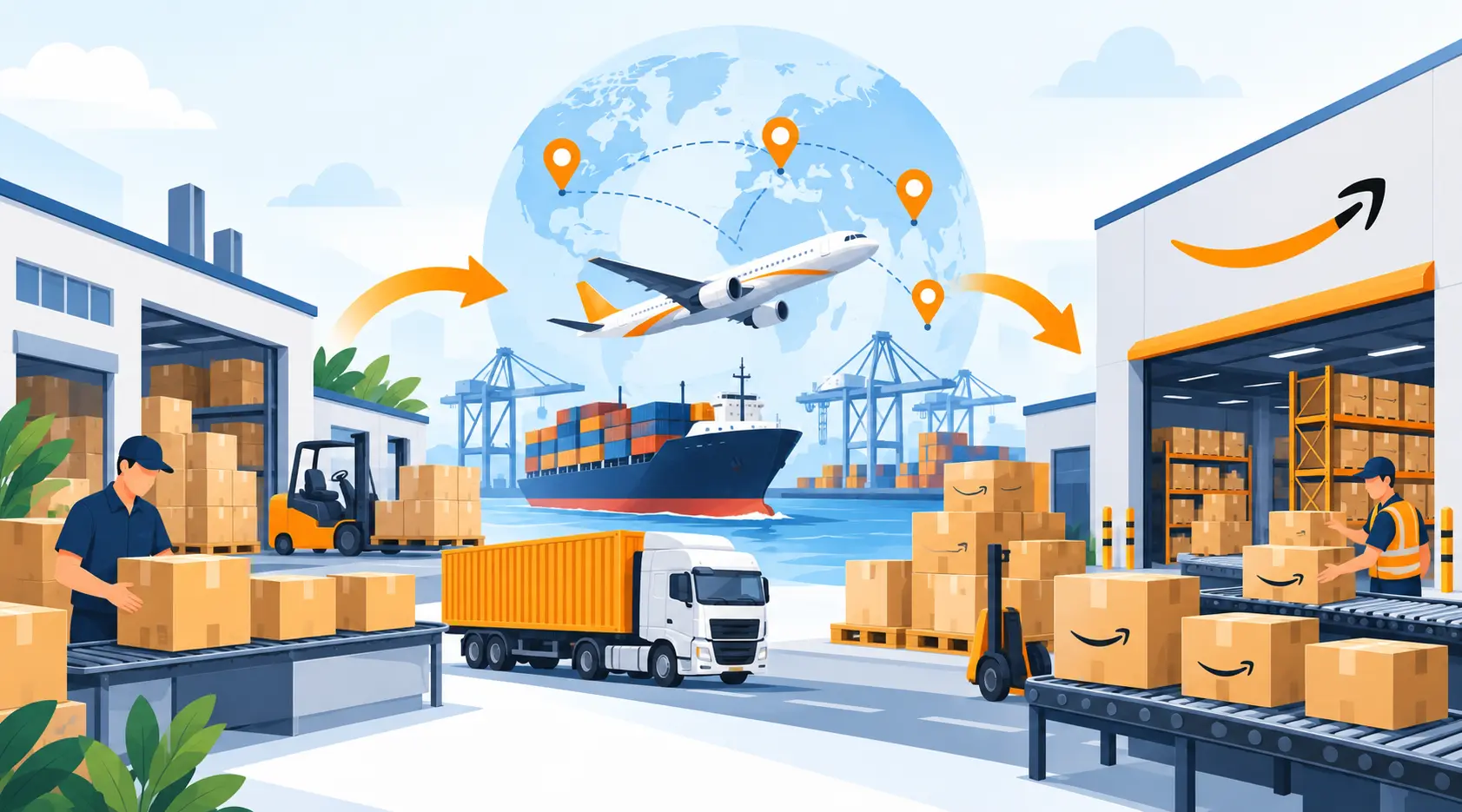
Shipping products from suppliers to Amazon FBA is an important part of the Amazon private label supply chain. After finding a supplier and completing production, sellers need to move inventory from the supplier’s facility to an Amazon fulfillment center while managing transportation, packaging, labeling, customs, freight costs, and delivery timelines.
The process can involve multiple stages, including supplier coordination, product inspection, carton preparation, freight booking, export documentation, customs clearance, transportation, and Amazon FBA receiving. A mistake at any stage can cause delays, additional costs, damaged inventory, or problems with the inbound shipment.
For Amazon sellers sourcing products internationally, understanding how freight and shipping work can make inventory planning much easier. The right shipping method depends on product size, weight, order quantity, destination, required delivery speed, budget, and inventory requirements.
This guide explains how to ship products from suppliers to Amazon FBA, how to choose a shipping method, how to prepare inventory, how freight forwarding works, and what Amazon sellers should consider before sending inventory to a fulfillment center.
What Does Shipping Products to Amazon FBA Mean?
Shipping products to Amazon FBA means transporting inventory from a manufacturer, supplier, warehouse, or other location to an Amazon fulfillment center where Amazon can store and fulfill customer orders.
The shipment may be domestic or international.
For international private label sellers, the process commonly involves moving products from a manufacturing location to a freight facility, transporting the shipment internationally, completing customs procedures where required, and delivering the inventory to the destination specified by the Amazon shipment process.
Amazon FBA does not eliminate the seller’s responsibility for getting inventory into the fulfillment network. Sellers still need to organize inventory preparation, shipment creation, transportation, documentation, and other applicable requirements.
The exact process can vary depending on the origin country, destination marketplace, product category, shipping method, supplier, and freight arrangement.
Start With Your Amazon Inventory Requirements
Before arranging freight, determine how much inventory needs to be shipped.
Your order quantity should be connected to expected sales, lead time, storage considerations, available working capital, and the time required to replenish inventory.
Shipping a very large quantity can reduce the frequency of freight orders, but it can also increase inventory holding requirements.
Shipping too little inventory may create a need for frequent replenishment and can increase the risk of running out of stock.
Consider your expected sales velocity and the complete supply chain timeline.
If manufacturing takes several weeks and international freight requires additional time, the replenishment order may need to be placed well before current inventory reaches a critical level.
Good inventory planning connects product sourcing, production, freight, Amazon FBA receiving, and expected customer demand.
Confirm Product Specifications Before Shipping
Do not arrange the final shipment until the finished products have been checked against your approved specifications.
Confirm the product quantity, dimensions, weight, packaging, labels, barcodes, carton configuration, and other requirements.
For private label products, make sure the final packaging matches the approved version.
If you use product inspection services, complete the appropriate inspection before the inventory leaves the supplier.
Shipping defective or incorrectly packaged inventory can be expensive because correcting the problem after the shipment has reached its destination may require additional transportation, relabeling, repackaging, or other handling.
A final pre-shipment review can help identify problems before the products enter international transportation.
Choose the Right Shipping Method
The main transportation options for international Amazon sellers include air freight, sea freight, express shipping, and other logistics solutions.
The appropriate option depends on the shipment characteristics and business requirements.
Air freight is generally used when speed is important and the shipment can justify the higher transportation cost.
Sea freight is commonly considered for larger and heavier shipments where transportation cost is more important than speed.
Express shipping can be useful for samples, small quantities, urgent shipments, or situations where fast delivery is a priority.
The decision should not be based only on the quoted transportation price.
Compare total landed costs, estimated transit time, shipment size, destination, customs requirements, handling, and delivery arrangements before choosing the method.
Air Freight for Amazon FBA
Air freight can provide faster transportation than ocean shipping, making it useful for urgent replenishment or products where shorter transportation times are important.
The trade-off is generally higher transportation costs, particularly for larger and heavier shipments.
Air freight may be appropriate when inventory is needed quickly or when the shipment is relatively small compared with the potential cost of waiting for sea transportation.
Before choosing air freight, calculate the total cost and compare it with the expected value of receiving the inventory sooner.
For time-sensitive products, seasonal inventory, or urgent replenishment, speed can become an important part of the shipping decision.
Sea Freight for Amazon FBA
Sea freight is commonly used for larger international shipments because it can provide a more economical transportation option for suitable cargo.
The main disadvantage is that the overall process can take longer.
Sea freight requires additional planning because the timeline may include supplier preparation, pickup, export handling, ocean transportation, destination procedures, customs clearance, and final delivery.
For private label sellers ordering larger quantities, sea freight can be part of a long-term replenishment strategy.
However, sellers should avoid waiting until inventory is nearly depleted before arranging ocean shipments.
Express Shipping for Samples and Small Shipments
Express shipping can be useful when speed is more important than transportation cost.
Amazon sellers may use express services for product samples, small quantities, documents, urgent inventory, or other situations where a faster delivery option is appropriate.
For large commercial orders, express shipping may not be the most economical option because transportation costs can increase significantly with shipment size and weight.
Use the shipping method that fits the purpose of the shipment rather than applying one method to every order.
Understand Freight Forwarding
A freight forwarder can help coordinate transportation between the supplier and destination.
Depending on the service arrangement, a freight forwarder may coordinate pickup, freight booking, export procedures, transportation, documentation, customs-related processes, and final delivery.
For Amazon sellers who are new to international logistics, working with an experienced logistics provider can simplify coordination.
However, sellers should understand what services are included in the quotation.
Ask whether the quoted price covers pickup, origin handling, international freight, destination charges, customs-related services, final delivery, and other applicable costs.
Do not assume that a single quoted shipping price automatically includes every expense.
Prepare Amazon FBA Shipment Details
Before inventory is shipped, sellers need to create and manage the applicable Amazon shipment information.
The shipment details should match the physical inventory being prepared.
Pay attention to product quantities, carton information, product identifiers, labels, destination information, and other requirements presented through Amazon Seller Central.
The physical shipment and the information entered into Amazon’s system should be consistent.
Incorrect quantities, labels, carton information, or shipment details can create receiving and processing problems.
Always review the current requirements presented in your Seller Central account because Amazon’s fulfillment and shipment processes can change.
Prepare Products and Cartons Correctly
Products should be packaged appropriately for transportation and fulfillment.
The packaging should protect products from damage during handling, transportation, storage, and delivery.
Cartons should be prepared according to the applicable requirements for the shipment.
For fragile products, additional protection may be necessary.
For products with multiple units, ensure that the unit packaging and carton configuration are clearly understood by the supplier and logistics provider.
Record the number of units per carton, carton dimensions, and carton weight.
Accurate carton information helps with freight planning and shipment documentation.
Use the Correct Product and Carton Labels
Labels are an important part of Amazon FBA shipment preparation.
Depending on the product and fulfillment arrangement, specific product and carton identification may be required.
Make sure the supplier understands which labels need to be applied and where they should be placed.
The barcode and product identification should be readable and properly associated with the correct inventory.
Carton labels should also correspond to the shipment information.
Incorrect or missing labels can cause additional handling and may delay inventory processing.
Before production begins, provide clear labeling instructions to the supplier so the requirements are understood before the products are packed.
Inspect Inventory Before Freight Pickup
A pre-shipment inspection can help verify that the inventory is ready to leave the supplier.
Inspect the product quantity, product quality, packaging, labeling, carton condition, dimensions, and other agreed requirements.
For larger orders, inspection becomes especially important because identifying a problem after the entire shipment has been transported internationally can be costly.
If an inspection identifies an issue, resolve it with the supplier before the inventory is dispatched.
For sellers who require support with supplier coordination and product quality, manufacturing quality control can be incorporated into the broader product sourcing process.
Understand Shipping Documents
International freight can involve several documents depending on the origin, destination, product, transportation method, and commercial arrangement.
Documents may include commercial invoices, packing lists, shipping documents, product-related documentation, and other information required for transportation or customs procedures.
The exact documents depend on the shipment.
The information across the documents should be consistent.
Product descriptions, quantities, values, weights, and other relevant information should accurately represent the shipment.
Incorrect documentation can create delays or additional questions during logistics and customs processes.
Work with the supplier and freight provider to understand which documents are required for your specific shipment.
Plan for Customs Clearance
International shipments may need to pass through customs before they can continue to their destination.
Customs procedures can depend on the origin country, destination country, product category, declared value, documentation, and applicable regulations.
Amazon sellers should understand who is responsible for customs-related procedures and charges under their shipping arrangement.
Do not assume that the freight quotation automatically covers every customs expense.
Your logistics provider should clearly explain the responsibilities associated with the shipment.
For sellers importing inventory internationally, planning customs requirements before the goods leave the supplier can help reduce unexpected delays.
Understand Landed Cost
The product purchase price is not the same as the total cost of getting inventory ready for sale.
Landed cost can include product manufacturing, packaging, inspection, transportation, freight, customs-related expenses, duties or taxes where applicable, handling, warehousing, and other logistics costs.
Understanding the complete landed cost is important when calculating Amazon profitability.
A supplier offering a lower unit price may not produce a lower total cost if the product requires expensive freight, special packaging, or additional handling.
Compare sourcing and logistics options using the complete cost rather than evaluating the supplier price alone.
Ship Directly From Supplier to Amazon or Use a Warehouse?
Amazon sellers can use different supply-chain arrangements.
In some situations, inventory may move directly from the supplier toward Amazon’s fulfillment network.
In other cases, products may first move to a third-party logistics provider, inspection facility, prep center, or warehouse.
Direct shipping can simplify the supply chain when the supplier can correctly manage product preparation and shipment requirements.
Using an intermediate warehouse can provide additional flexibility for inspection, storage, bundling, labeling, repackaging, or inventory distribution.
The appropriate model depends on the product, supplier capabilities, order volume, destination, and operational requirements.
Coordinate With Your Supplier
Clear communication with the supplier is essential before freight pickup.
Confirm the production completion date, inspection status, product quantity, carton quantity, carton dimensions, carton weight, packaging, labels, pickup address, and expected availability date.
Make sure the supplier knows exactly when the freight provider will collect the goods.
Last-minute changes can cause delays if the supplier, inspection company, and freight forwarder are working with different information.
Maintain a written record of important shipping instructions and product specifications.
This creates a clear reference if questions arise during transportation.
Track Your Shipment
After the shipment leaves the supplier, continue monitoring its progress.
Depending on the transportation method, tracking information may show different stages of the shipment.
Track the shipment from supplier pickup through transportation, customs procedures where applicable, final delivery, and Amazon receiving.
Do not assume that carrier delivery automatically means inventory is immediately available for sale.
Amazon may require additional time to receive and process inventory after delivery.
Tracking the complete process allows sellers to identify potential delays and plan inventory more effectively.
Plan Amazon Inventory Around Shipping Time
Shipping should be integrated into your inventory management strategy.
If your product takes several weeks to manufacture and ship, reorder planning must begin before inventory reaches zero.
Calculate your expected sales during the combined manufacturing and logistics period.
Consider potential delays rather than planning around an ideal timeline.
Seasonal demand also needs additional attention.
Products that experience increased sales during holidays, special events, or seasonal periods should be ordered early enough to account for production and transportation timelines.
For ongoing inventory planning, sellers can also review Amazon account health management and broader operational processes to reduce avoidable fulfillment and account-related issues.
Common Shipping Mistakes Amazon Sellers Should Avoid
One common mistake is choosing a shipping method based only on the lowest quoted price. The cheapest transportation option may not provide the delivery timeline or service level required by the business.
Another mistake is failing to inspect products before shipment. Sending defective inventory into international transportation can make corrections significantly more complicated.
Incorrect carton information can also create problems during shipment preparation.
Some sellers also forget to calculate the complete landed cost and therefore underestimate the actual cost of getting inventory ready for sale.
Waiting until inventory is almost depleted before placing a new order is another common problem. Manufacturing and international shipping can take much longer than expected.
Finally, unclear communication between the supplier, freight forwarder, inspection provider, and seller can create avoidable delays.
How to Create a Reliable Supplier-to-FBA Shipping Process
A reliable process begins with accurate product and inventory planning.
First, confirm your product specifications, order quantity, packaging, and labeling requirements.
Next, complete the necessary supplier checks and product inspection.
Create the applicable Amazon shipment information and ensure that physical inventory matches the shipment details.
Collect accurate carton dimensions and weights.
Compare freight options based on total cost, transportation time, shipment size, and business requirements.
Select a suitable logistics provider and confirm the services included in the quotation.
Coordinate pickup with the supplier and make sure all relevant documentation is prepared.
Track the shipment through transportation and customs procedures where applicable.
After delivery, monitor Amazon’s receiving process and update your inventory records.
Finally, use the actual shipping timeline and costs to improve your next replenishment plan.
Frequently Asked Questions
Can I ship products directly from my supplier to Amazon FBA?
Yes, inventory can be shipped from a supplier toward Amazon’s fulfillment network when the products, packaging, labeling, shipment information, and logistics arrangements meet the applicable requirements. The exact process depends on the product and shipment.
What is the best shipping method for Amazon FBA?
There is no single shipping method that works for every Amazon seller. Air freight can be suitable when speed is important, while sea freight can be considered for larger shipments where transportation cost is a major factor. Express shipping can be useful for samples and small urgent shipments.
How do I ship products from China to Amazon FBA?
The process generally involves supplier production, product inspection, packaging and labeling, shipment preparation, freight booking, export and customs procedures where applicable, international transportation, and delivery into Amazon’s fulfillment network.
Should I use a freight forwarder for Amazon FBA?
A freight forwarder can help coordinate transportation and logistics activities, particularly for international shipments. Before choosing one, confirm which services and charges are included and understand who is responsible for customs and final delivery.
What is the difference between air freight and sea freight?
Air freight generally provides faster transportation but can be more expensive for suitable shipments. Sea freight is commonly used for larger international shipments where transportation cost and cargo volume make ocean transportation practical.
What information does my supplier need for Amazon FBA shipping?
Your supplier may need product specifications, quantities, packaging instructions, labels, carton information, shipment details, pickup information, and other applicable preparation requirements. The exact information depends on the product and shipping arrangement.
How can I reduce Amazon FBA shipping costs?
Compare multiple freight options, optimize product and carton dimensions, plan inventory in advance, consolidate suitable shipments, negotiate supplier and logistics terms, and evaluate total landed cost rather than focusing only on the freight quotation.
How long does it take to ship products to Amazon FBA?
The timeline varies significantly based on the supplier’s production schedule, origin, destination, shipping method, customs procedures, carrier, and Amazon receiving process. Sellers should plan using the complete supply-chain timeline rather than transportation time alone.
Final Thoughts
Learning how to ship products from suppliers to Amazon FBA is an essential part of managing a private label supply chain.
The process involves much more than booking transportation. Sellers need to coordinate product quality, packaging, labeling, shipment information, freight, documentation, customs procedures, inventory planning, and Amazon receiving.
Start by confirming your product and inventory requirements. Inspect products before shipment, prepare accurate carton information, choose the appropriate transportation method, and work with suppliers and logistics providers using clear written instructions.
Most importantly, connect freight planning with your inventory strategy. Manufacturing, transportation, customs, and Amazon receiving can all affect how quickly inventory becomes available for sale.
A structured supplier-to-FBA shipping process can help Amazon sellers control logistics, understand landed costs, reduce avoidable delays, and maintain more predictable inventory replenishment.