
A bundle that looks clever on a product page can quietly damage margin, fragment inventory, and confuse buyers. The better approach is to build a bundle around a complete buying job: what does the customer need to use, maintain, store, or improve the core product? That is the commercial foundation of how to build Amazon bundles that earn incremental revenue instead of simply discounting products you already sell.
For private-label brands, bundles can raise average order value, improve conversion, defend against direct price comparisons, and create more entry points into Amazon search. But they only work when product strategy, FBA operations, listing content, pricing, and PPC are planned as one system.
Start With a Customer Outcome, Not Excess Inventory
The fastest way to create a weak bundle is to combine slow-moving products and call it a deal. Customers recognize that tactic immediately. A viable Amazon bundle should make the purchase simpler, more complete, or more valuable than buying each component separately.
Start by reviewing your existing catalog through three lenses: products bought together, products used in sequence, and products that solve the same use case for different customer needs. A hydration bottle paired with cleaning tablets and a carry sleeve serves a clear daily-use outcome. A beard trimmer paired with oil, a comb, and replacement guards supports a complete grooming routine. A kitchen storage bundle can help a buyer organize a pantry rather than purchase disconnected containers one at a time.
Your first question should be: what does the buyer still need after purchasing the hero SKU? The answer often reveals the strongest bundle opportunity.
Amazon data should validate the idea. Look at frequently bought together patterns, customer questions, reviews, returns, search term reports, and competing listings. Reviews are particularly useful because they expose friction. If buyers repeatedly ask whether batteries, refills, storage accessories, or cleaning tools are included, there may be an opportunity to package the answer into a higher-converting offer.
Choose the Right Amazon Bundle Structure
Not every bundle should be built the same way. Your operational model determines what you can advertise, how inventory is managed, and how easily the offer scales.
Virtual bundles
Virtual bundles are generally best for Brand Registered sellers with FBA inventory already available for each eligible component. The components remain separate ASINs in Amazon fulfillment, while shoppers see a combined offer on one bundle detail page. This can reduce prep complexity because you do not need to physically assemble every unit before inventory reaches Amazon.
Virtual bundles are useful for testing product combinations, especially when a brand has an established catalog and wants to create a larger basket without committing to new packaging. Their limitation is control. Component availability matters, and the bundle can become unavailable when a required ASIN runs out of stock. Brands also need to confirm current category, Brand Registry, and fulfillment eligibility before building around this model.
Physical bundles
A physical bundle is assembled, packaged, labeled, and sent to FBA as one sellable unit. This is often the stronger choice when presentation matters or when the combined products need protective packaging, instructions, branded inserts, or a distinct unboxing experience.
Physical bundles give you more control over how the customer perceives value. They can also reduce the chance that a buyer sees the offer as a simple grouping of products. The trade-off is greater operational responsibility: sourcing, assembly, FBA prep, labeling, carton planning, quality control, inbound freight, and replenishment all need to be managed against the bundle SKU.
Multipacks are different again. A two-pack of the same item is usually a quantity-based offer, while a bundle combines complementary items. Treat the distinction carefully in your title, images, packaging, and product data. Misrepresenting contents or quantities creates avoidable compliance risk and return issues.
Build the Economics Before You Build the Listing
A bundle should not be approved because its retail price looks attractive. It needs a margin model that accounts for every cost created by the new offer.
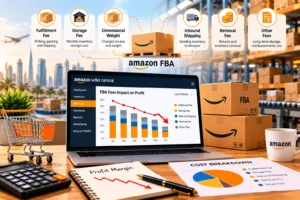
Calculate the landed cost of every component, assembly and packaging costs, inbound freight, FBA fulfillment fees, referral fees, storage exposure, expected advertising cost, and a realistic allowance for returns or damage. Then compare the projected contribution margin with the margin of selling the hero product by itself.
The goal is not always to offer the deepest discount. In many categories, a modest perceived saving is enough when the bundle reduces buyer effort. A premium bundle can outperform a discounted one if it includes the items customers actually need and communicates why they belong together.
Be cautious with low-priced accessories. They may appear inexpensive, but they can increase dimensional weight, create extra prep work, or move the order into a less favorable fulfillment-fee range. A bundle that lifts average order value but lowers contribution margin is not a growth asset.
Set a minimum viable margin before launch, then model a downside scenario. Ask what happens if advertising cost rises, the lowest-stock component becomes constrained, or returns are higher than expected. This discipline prevents a bundle from becoming a revenue-positive but cash-negative SKU.
Package for Compliance, Protection, and Conversion
Physical bundles need to arrive at the customer intact and clearly represented. The packaging must keep individual components secure, protect fragile items, and make it obvious that the customer is receiving a single bundled offer. Verify current Amazon prep, labeling, safety, and category requirements before shipping inventory to FBA, as requirements can change by marketplace and product type.
The front of the package should support recognition, not overload the buyer with claims. Use clear branding, a concise bundle name, and visual cues that show what is included. For products with compatibility requirements, add plain-language guidance. If a bundle is designed for a specific model, size, or routine, ambiguity will increase returns.
Quality control matters more with bundles because one missing or damaged component can make the entire order unsellable. Inspect assembled units against a documented checklist: correct SKUs, correct quantities, clean packaging, secure seals, readable labels, and accurate inserts. A reliable prep process protects account health as well as customer experience.
How to Build Amazon Bundles That Convert
A bundle listing must answer two questions in seconds: what is included, and why should the buyer purchase these items together? Do not rely on a title alone to do that work.
Lead your main image with a compliant, easy-to-understand view of all included products. Secondary images should clarify quantities, dimensions, use cases, compatibility, and the value of buying the set. An infographic that compares the bundle components with the customer outcome can be more persuasive than a generic feature graphic.
Your title should accurately name the core product and bundle format without stuffing every component into a long string of keywords. In bullets and A+ Content, explain the use case, component details, and instructions that reduce uncertainty. The listing should be readable by a shopper who has never seen your brand before.
Search optimization needs to reflect the complete buyer intent. A camping cookware bundle, for example, may be relevant to searches around compact camp cooking, backpacking meal preparation, and outdoor cooking kits. That does not mean targeting every broad term available. It means building semantic relevance around the problem the bundle solves.
This is increasingly important for conversational discovery. Amazon shoppers can ask questions that resemble real shopping conversations, including what they need for a routine or activity. Content structured around components, compatibility, outcomes, and use cases gives Amazon clearer signals for matching the bundle to relevant discovery paths, including Rufus-led product exploration.
Launch With Controlled Advertising and Inventory Coverage
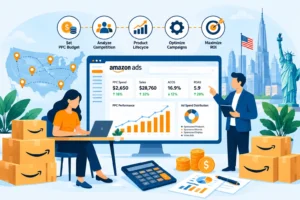
A new bundle has no sales history, so its launch plan should create enough qualified traffic to validate conversion without overspending. Start with the strongest customer-intent terms from your component ASINs, then test product targeting against complementary and competing offers. Sponsored Products can establish early search visibility, while Sponsored Brands can help brands explain the collection or routine behind the bundle.
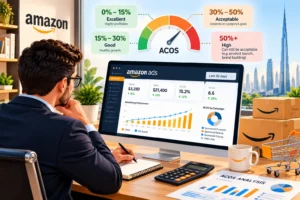
Do not judge the launch only by ACoS. Review conversion rate, average order value, return reasons, organic rank movement, detail page sessions, and component inventory health. A bundle with a slightly higher ACoS may still be commercially valuable if it acquires customers profitably and lifts repeat purchases across the catalog.
Inventory planning is where many otherwise successful bundles fail. For virtual bundles, monitor each component because the bundle is only available when the required ASINs are in stock. For physical bundles, forecast at the assembled-SKU level while reserving enough component inventory for direct sales where appropriate. The right balance depends on margins, replenishment lead times, and whether the bundle is becoming the preferred buying format.
Treat Bundles as a Portfolio, Not a One-Time Promotion
The first bundle is a test, not a final answer. Review performance after enough traffic and orders have accumulated to identify a pattern. If clicks are strong but conversion is weak, the value proposition or imagery may be unclear. If conversion is strong but margin is thin, revisit component selection, price, packaging cost, or ad targeting. If return rates rise, inspect compatibility messaging and physical quality control before scaling spend.
The best-performing bundles often create a product ladder: an entry-level core SKU, a higher-value routine bundle, and a premium giftable or professional set. This gives shoppers a clearer choice while allowing the brand to serve multiple budgets and intents without racing to the bottom on price.
A disciplined bundle strategy turns separate ASINs into a stronger commercial system. Build around a real customer outcome, validate the economics, protect the operational details, and let performance data decide which offers deserve more inventory and advertising investment.
Frequently Asked Questions
1. What is an Amazon product bundle?
An Amazon product bundle combines two or more complementary products into a single offer designed to provide a more complete solution for the customer. Unlike a simple multipack, a bundle typically includes different products that are used together, solve a related need, or improve the overall customer experience.
2. How do I build an Amazon bundle?
Start by identifying what customers need alongside your core product. Review products bought together, customer reviews, questions, search terms, and competing offers to identify complementary items. Before creating the bundle, evaluate product compatibility, pricing, landed costs, Amazon fees, packaging, advertising costs, inventory requirements, and expected contribution margin.
3. What is the difference between a virtual bundle and a physical bundle on Amazon?
A virtual bundle combines eligible individual ASINs into one offer while the products remain separate in Amazon fulfillment. A physical bundle is assembled, packaged, labeled, and managed as a single sellable unit. The right option depends on factors such as Brand Registry eligibility, fulfillment requirements, presentation, inventory management, and the level of control needed over the customer experience.
4. Do I need Amazon Brand Registry to create virtual bundles?
Virtual bundle eligibility is generally associated with Brand Registered sellers and eligible FBA products, but Amazon’s requirements can vary by marketplace and may change over time. Sellers should confirm current eligibility requirements before building their bundle strategy around virtual bundles.
5. How should I price an Amazon bundle?
Bundle pricing should be based on the complete economics of the offer rather than simply applying a discount. Consider the landed cost of every component, packaging, assembly, inbound freight, FBA fulfillment fees, referral fees, storage costs, expected returns, and advertising costs. The bundle should provide clear customer value while maintaining a commercially sustainable contribution margin.
6. How can I optimize an Amazon bundle listing for conversion?
Make it immediately clear what the customer receives and why the products belong together. Use compliant images that clearly show the included components, explain quantities and compatibility, and demonstrate the customer outcome. Your title, bullet points, product information, and A+ Content should accurately explain the bundle, its use case, and the value of purchasing the products together.
7. How do I advertise an Amazon product bundle?
Start with relevant, high-intent search terms connected to the customer problem the bundle solves. You can also test product targeting against complementary and competing products where appropriate. Monitor conversion rate, advertising cost, average order value, return reasons, organic visibility, and inventory availability. Advertising should be scaled based on profitable performance and the ability to maintain sufficient stock for the bundle components.